

BODY MARKS
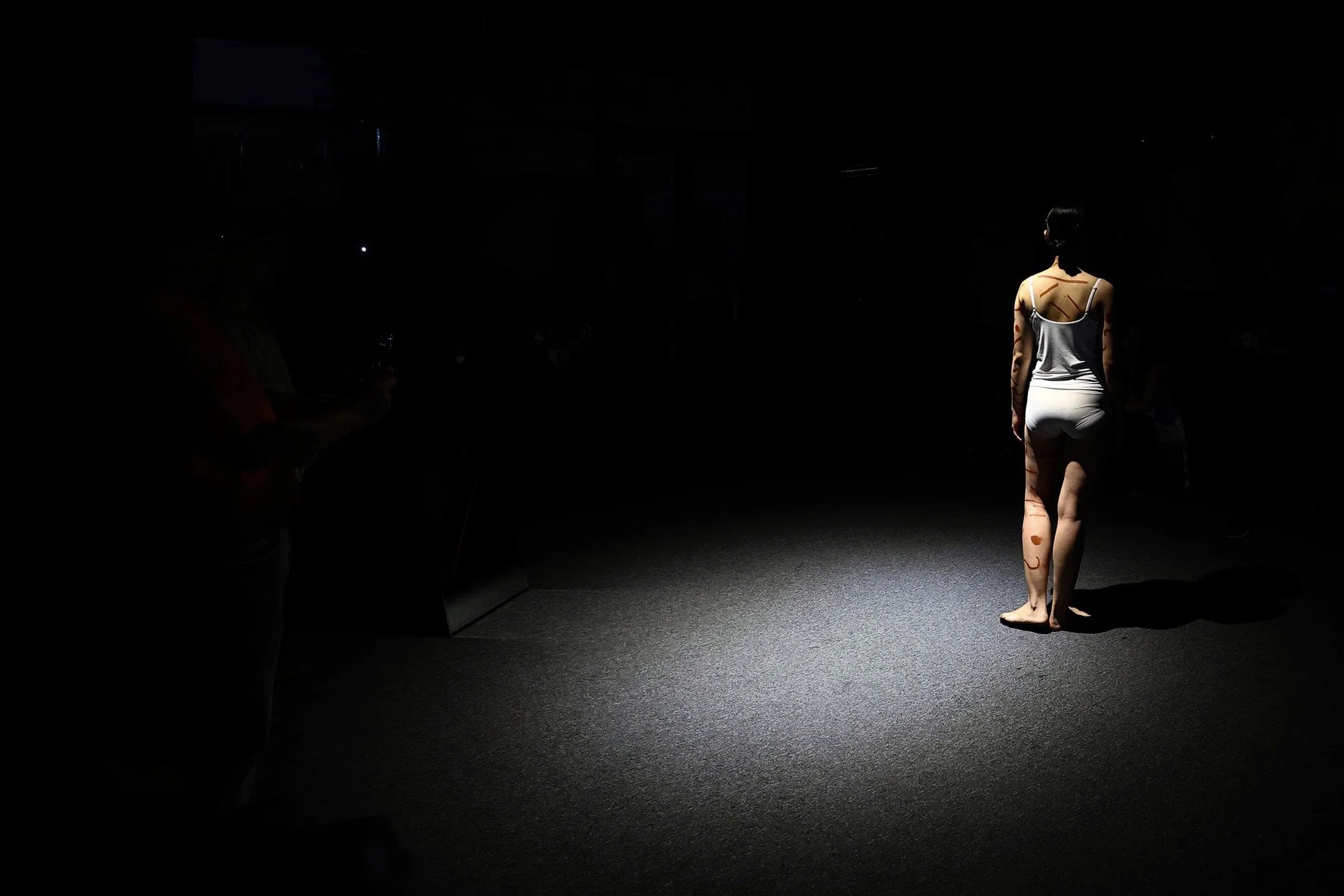
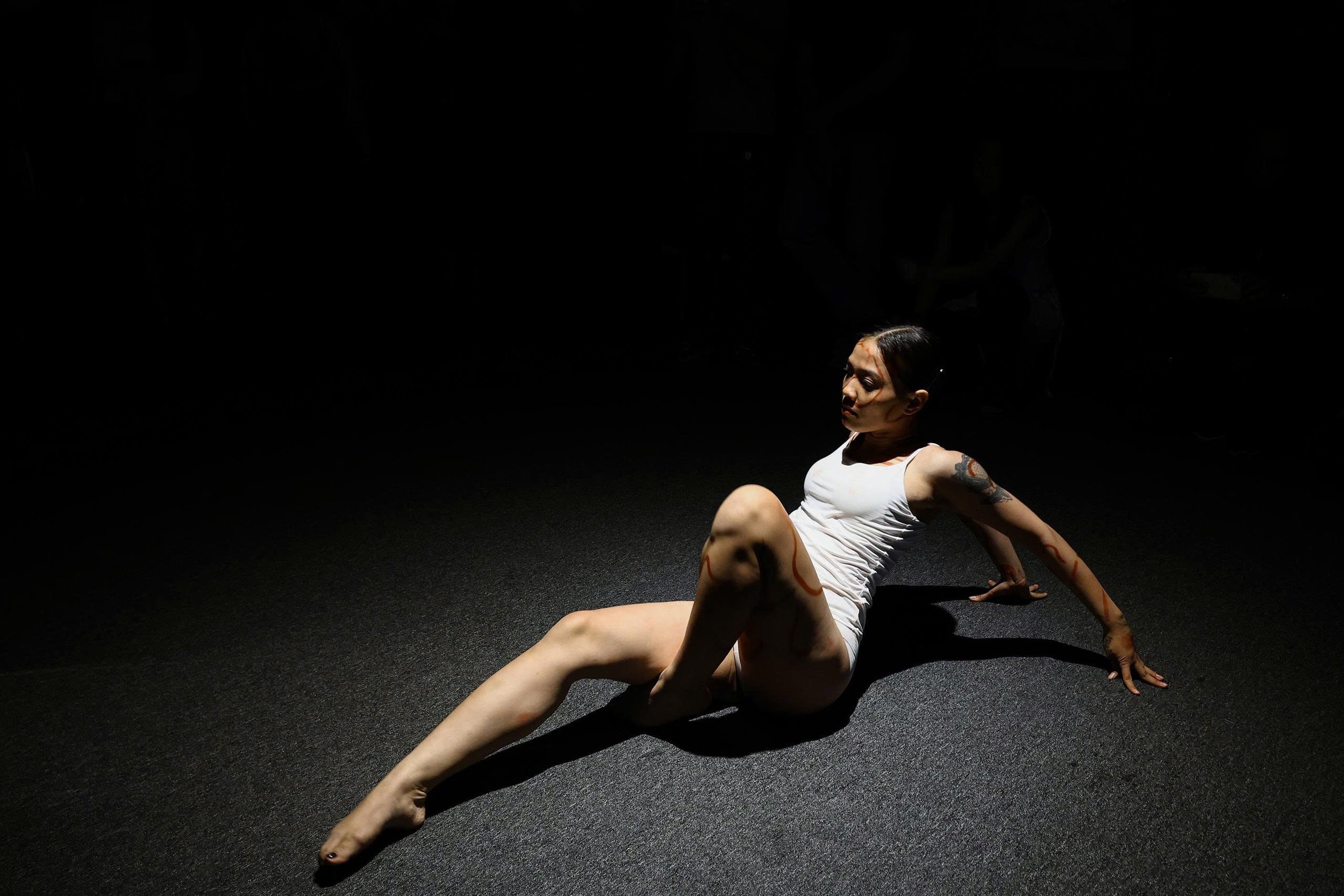
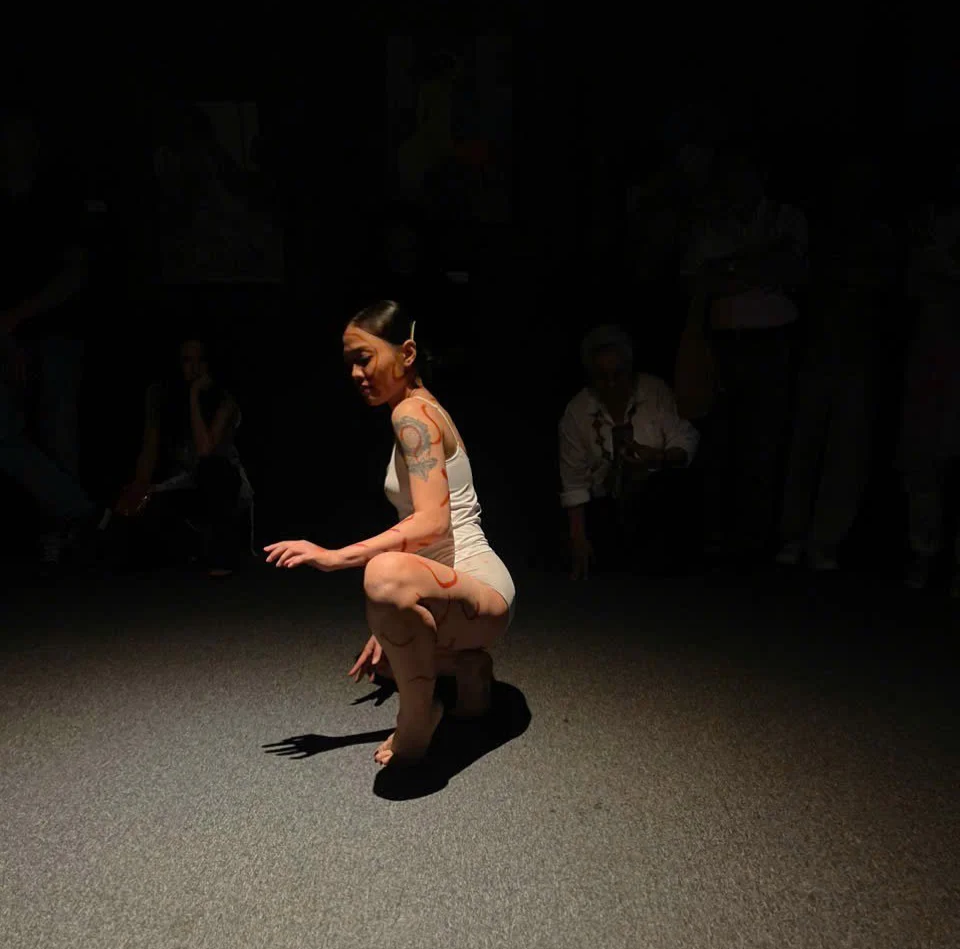
Body Marks Performance is a journey of searching for personal identity through encounters with historical and cultural intersections. The body is approached as a site of lived experience, where memory and emotion are inscribed through authentic expressions of movement. The work draws on the tonal marks of the Vietnamese language including Level (—), Falling (`), Rising ( ’ ), Dipping/Falling-Rising ( ? ), Broken/Glottalized ( ~ ) and Heavy/Creaky ( . ) as a conceptual conduit for performance. Rather than functioning through pronunciation, these tonal marks are translated into visual forms and movement structures, becoming a means of dialogue with the body through form and motion.
This entire process unfolds without choreography or a fixed script, operating instead as an open structure within contemporary performance practice.
Làm gì
Để chi
Có gì đâu
Đi sở
Đi làm
Đi mần
Cha
Bố
Ba
Tía
Thầy
Mệ
Mẹ
Má
Ni
Kia
Tê
Nớ
Ngã uỳnh
Té chổng giò
Từ từ
Lẹ lẹ
Mau mau
Đấm
Đục
Giẫm
Đạp
Mướn
Mượn
Vay
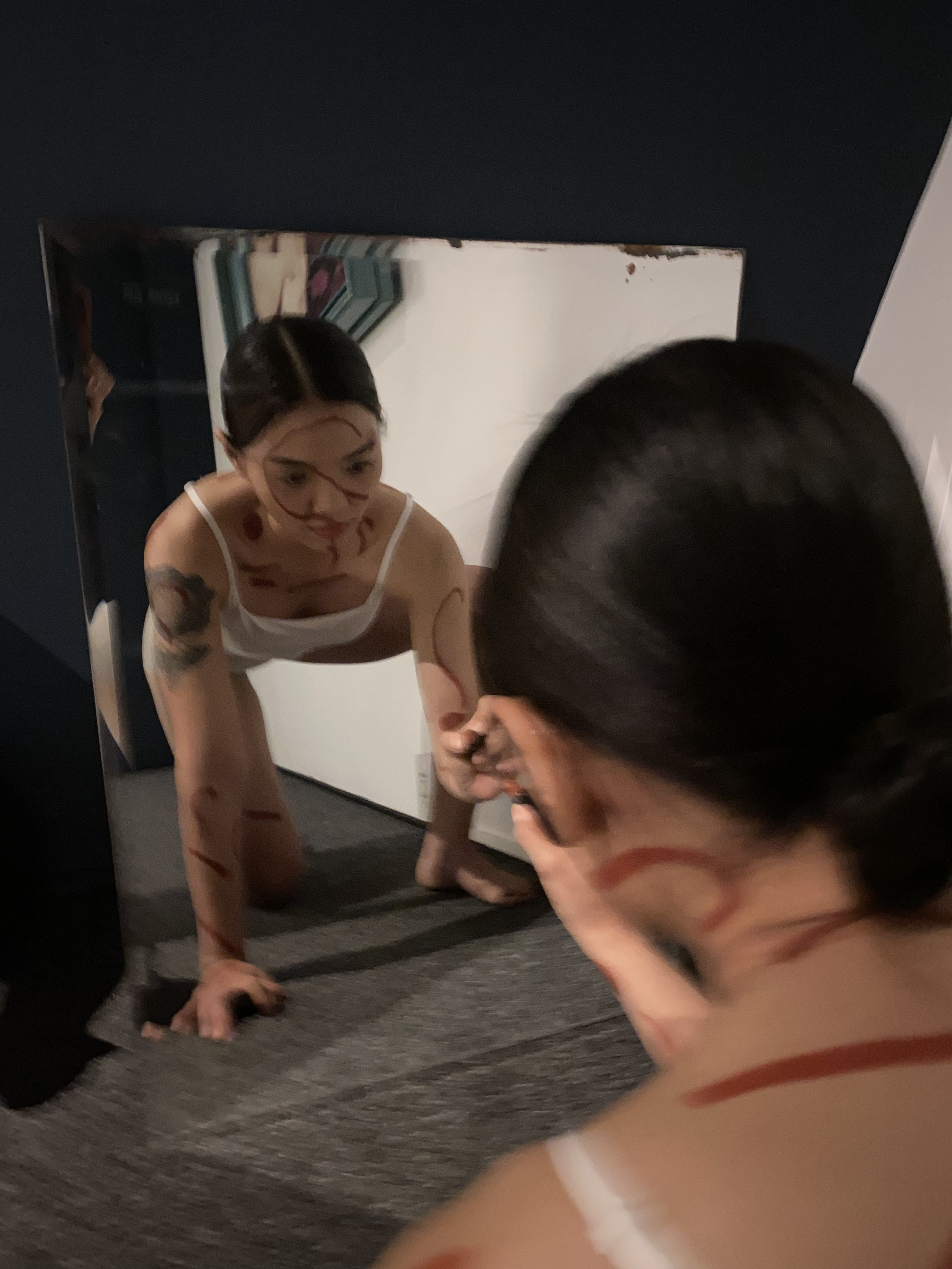
Cultural & Linguistic Context
In Vietnamese, tonal usage and pronunciation vary across regions from North to South, giving rise to distinct dialects and local speech patterns. Historical migration processes, particularly since the Đổi Mới period, have produced hybrid tonal systems through cultural and linguistic overlap. As someone born and raised in Saigon within a family that migrated from Northern Vietnam, this tonal hybridity has invisibly yet profoundly shaped my perception of meaning, communicative rhythm, and interpersonal relationships. In this context, tonal marks function not merely as linguistic devices, but as traces of migration, memory, and identity inscribed onto the body and lived experience.
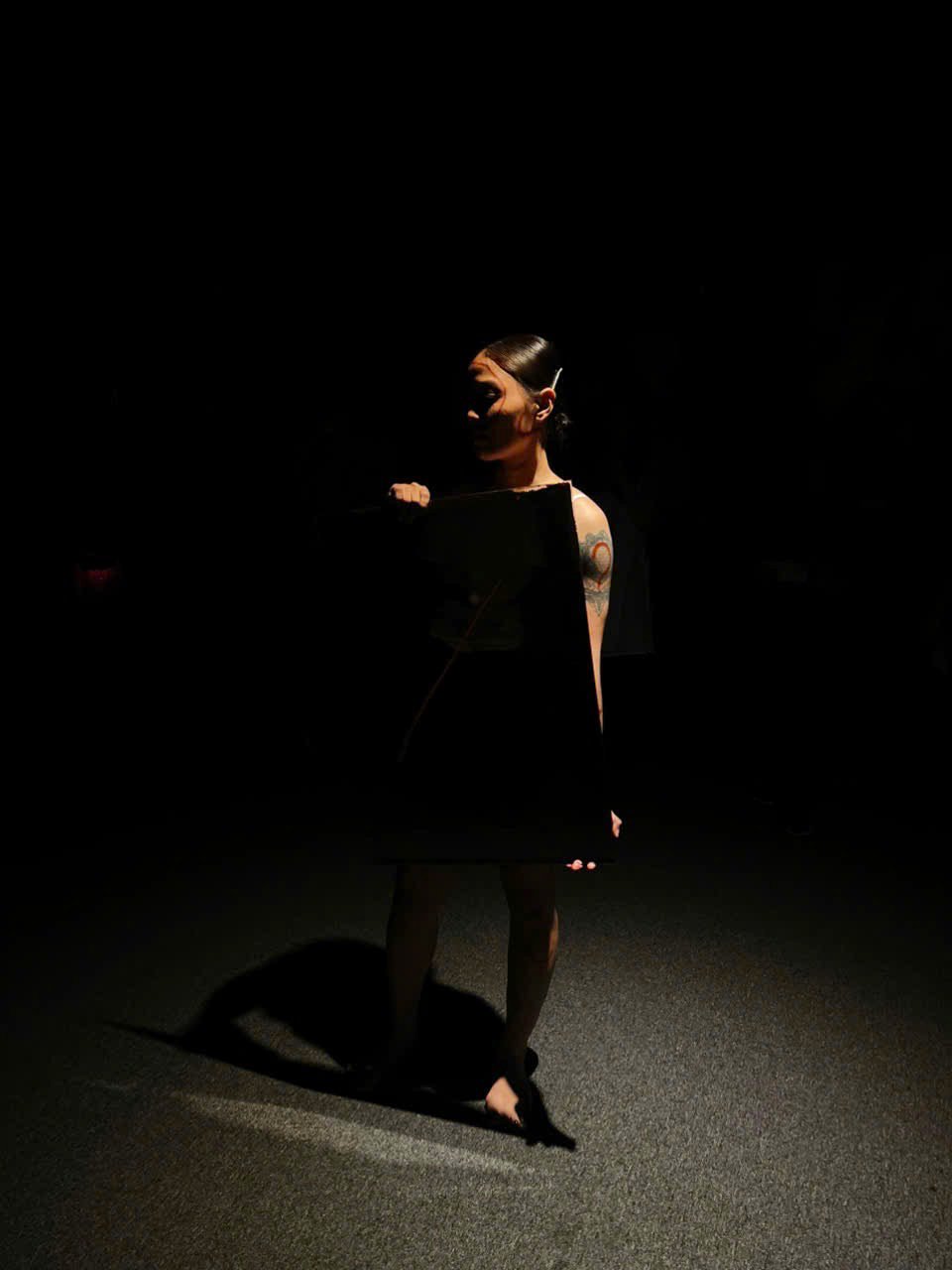
Act I: Reflection and Presence
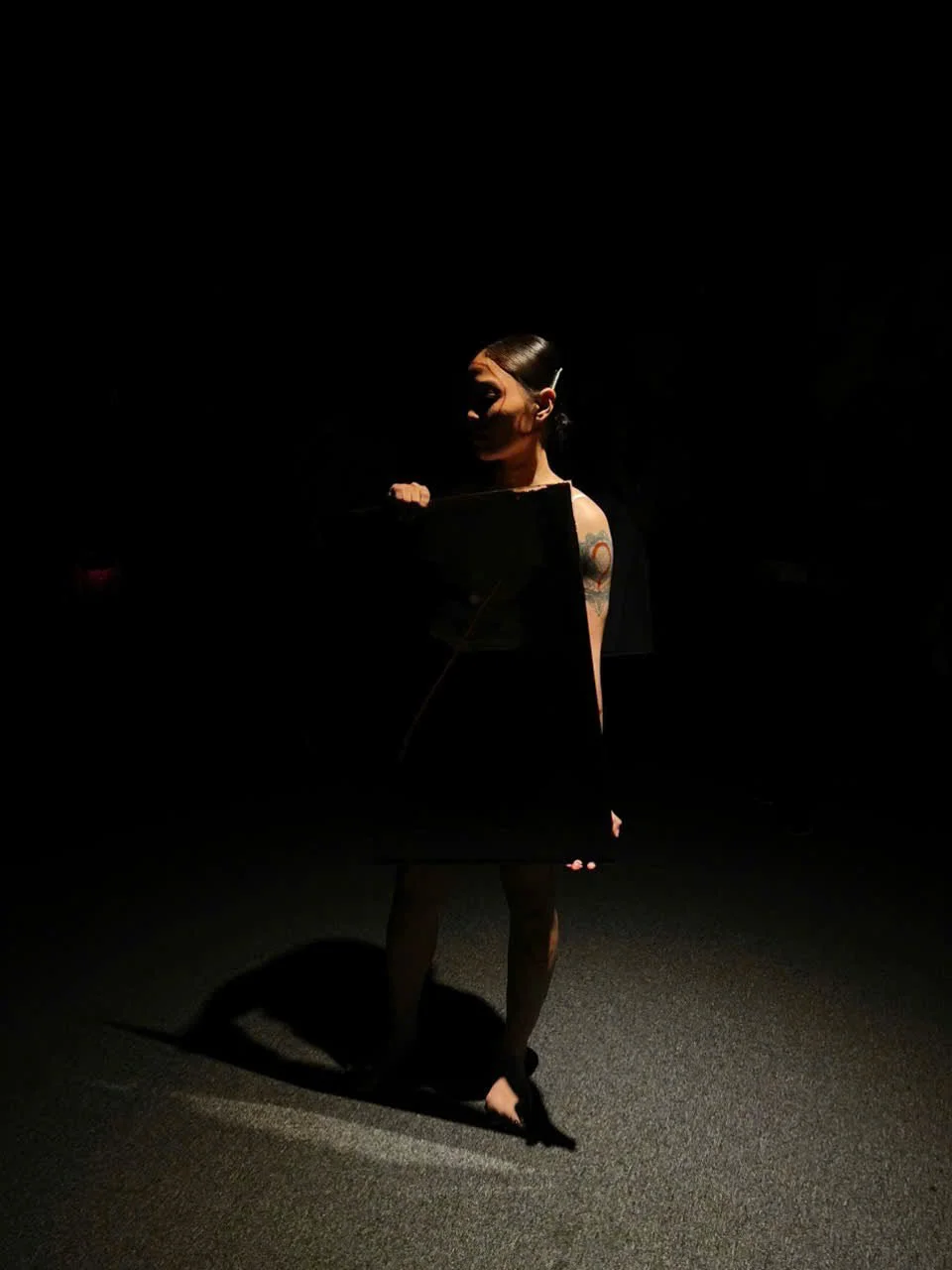
The first act unfolds through the simultaneous presence of the audience and the performer, articulated through visual contrast: mirrors reflecting the viewers themselves, and the performer’s body marked with tonal signs. The work does not assert the necessity of a visible tonal mark; rather, it proposes that each body already carries its own complete melodic system of tones.
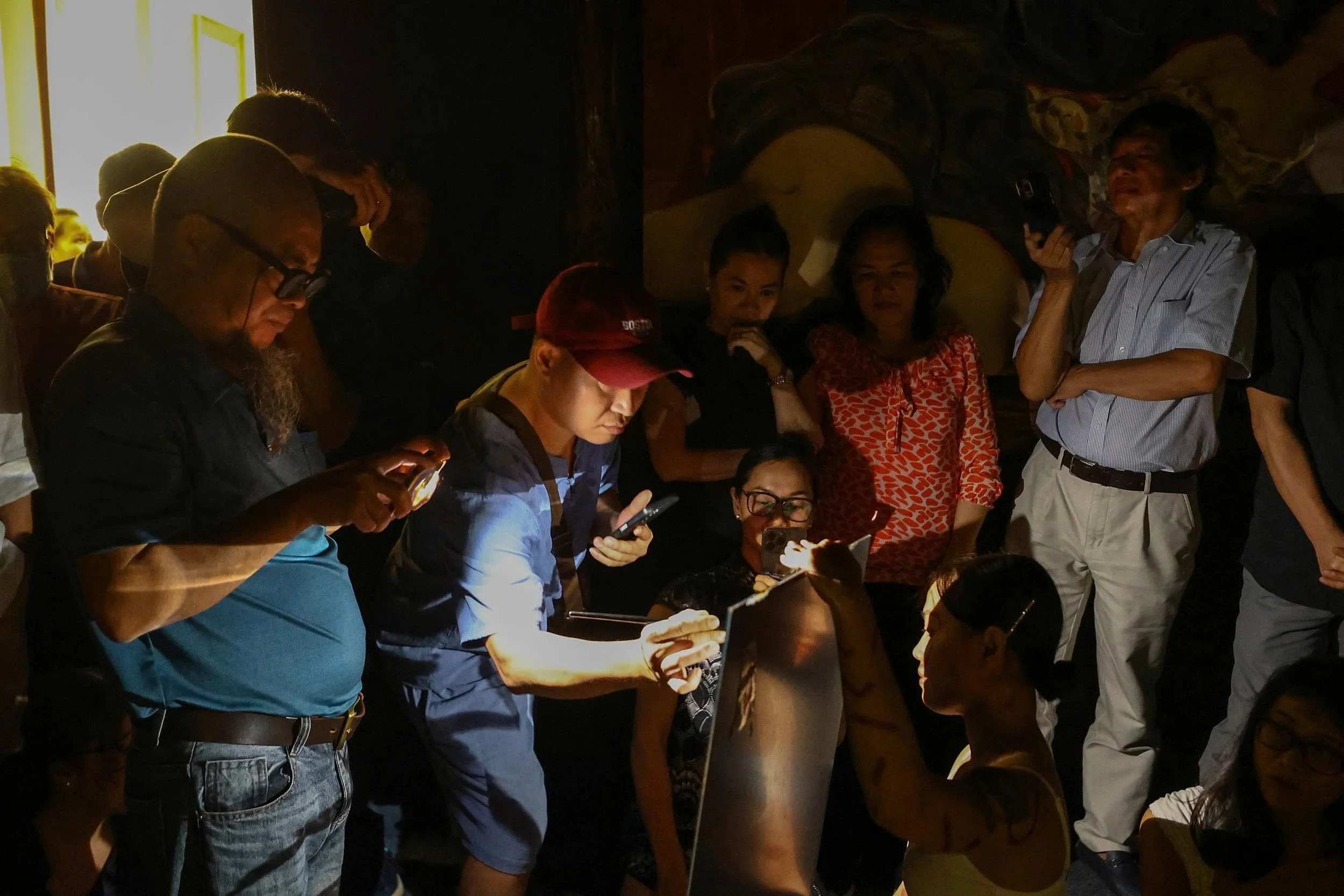
Act II: Co-creation
In the second act, the audience is invited into a process of co-creation. The performer opens a space for participants to continue “writing” their own body marks onto the mirrored surface. Through acts of reflection and inscription, individual traces merge into a collective layer, transforming the performance into a communal artwork—where embodiment and signification coexist and enter into dialogue
Credits
Choreography & Performing
Đức Hạnh
Support
Makeup and Stage: Nhi Lê
Music
Vespera by Loscil
Falaise by Floating Points